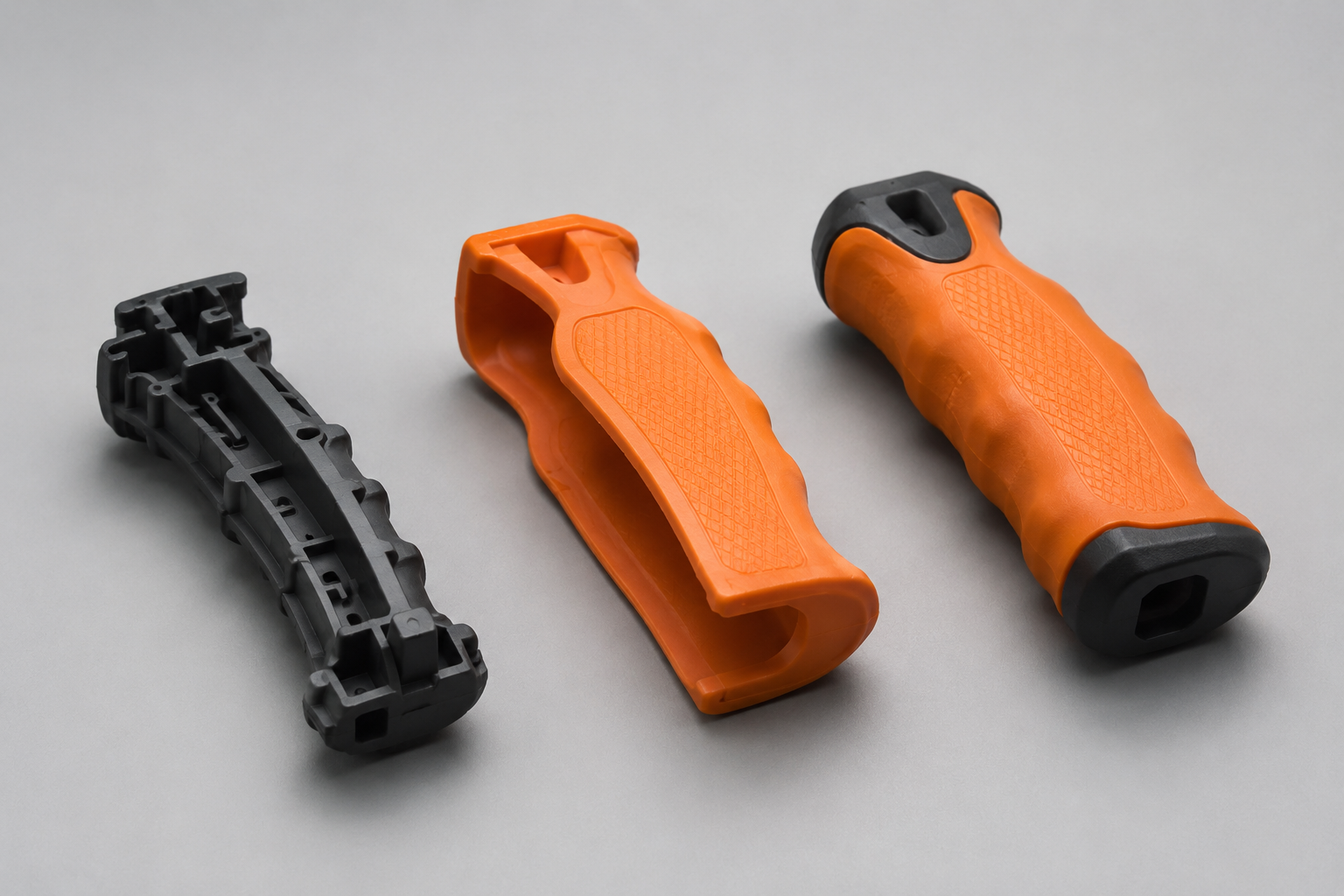
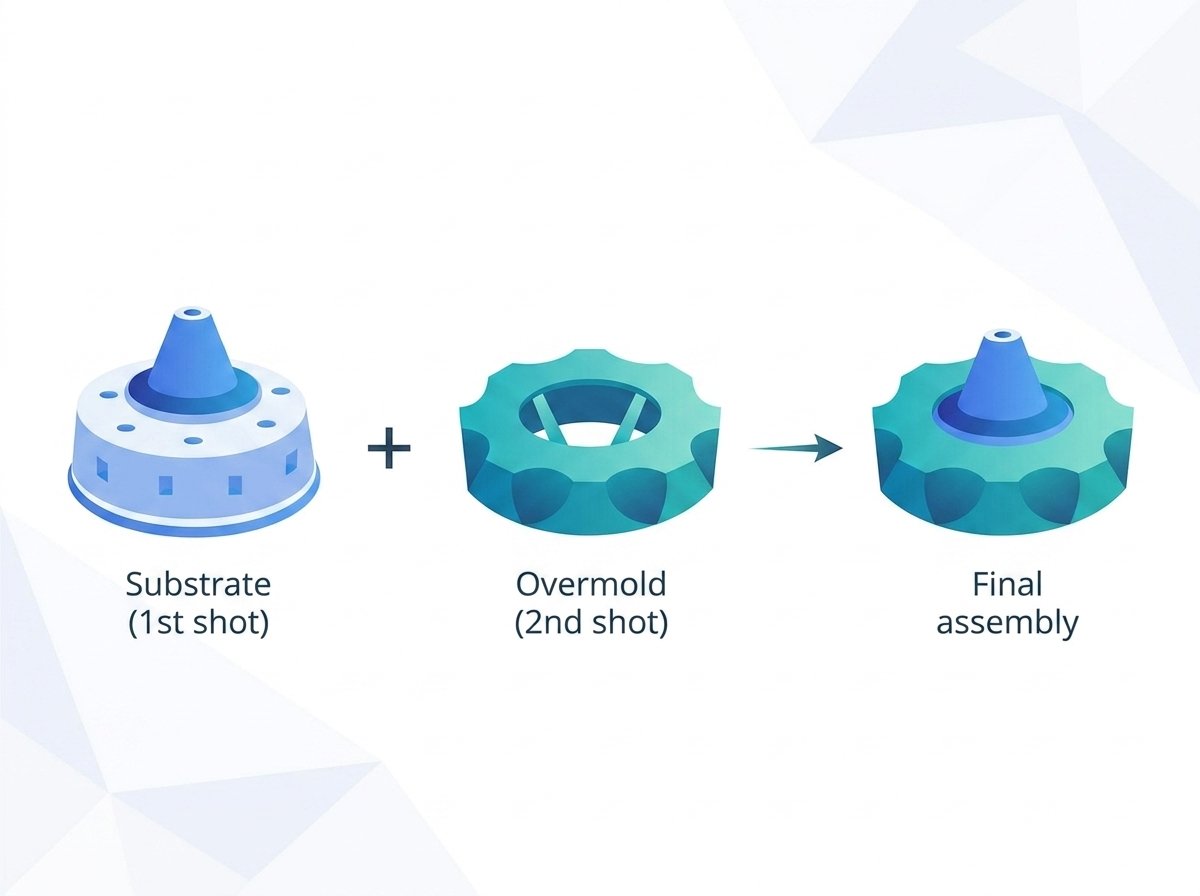
Over-molding is a manufacturing process where one material is molded over another typically a softer plastic or rubber over a rigid plastic or metal part to create a single, integrated component. It’s commonly used to improve grip, durability, aesthetics, or functionality without the need for secondary assembly.
Why Over-Molding?
Adds soft-touch grip to rigid handles, housings, or tools.
Integrates sealing or cushioning without a separate assembly step.
Improves aesthetics with multi-material, multi-color components.
Increases durability by combining materials with complementary properties.
Reduces manufacturing steps and total assembly cost.
Common Over-Molding Applications
Tool grips and handles TPE or rubber over rigid nylon or ABS substrates.
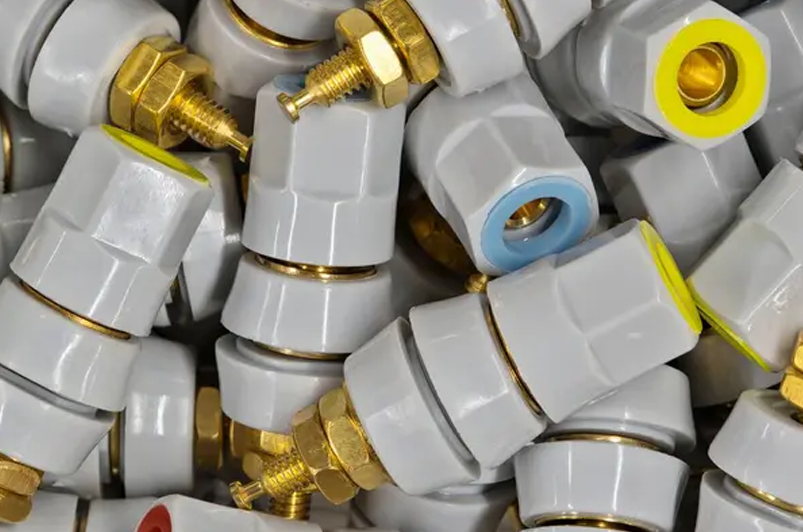
Electronic enclosures with soft-touch surfaces or integrated gaskets.
Medical and lab components requiring ergonomic grip or material separation.
Consumer products requiring multi-material aesthetics or functional layering.
Materials
Substrate materials: ABS, nylon, polycarbonate, acetal, and other rigid engineering plastics.
Over-mold materials: TPE (thermoplastic elastomer), urethane, and compatible soft or flexible resins.
Material compatibility is reviewed during quoting. Our engineering team will evaluate your design and recommend the right combination for your application.